Settings before light. Gear before thinking. Rules that only work in ideal conditions. This doesn't lead to learning, it leads to chaos and frustration.
You don’t need better gear. You need better understanding.
Shutter Theory teaches you how to see, think, and create with intention, so your camera actually does what you want it to do.
Watch Shutter Theory on YouTube
Exposure, light, and composition should be decisions you make, not recipes you follow blindly.
This is the part most tutorials skip, because it’s harder to explain.
When you understand light the camera stops fighting you and you create with intent.
That’s when photography stops feeling like luck. You’re no longer hoping the shot works, you know why it will.
Composition: Recognize the shot. Know what to look for.
Observation: See the light, the moment, the frame.
Response: Control the camera, the light, and the scene.
Execution: Create the image. Edit the file. Finish the work.
Community matters, but most online photography groups are awful.
They turn into gatekeeping contests, gear flexing, bad critiques delivered with confidence, and the same handful of loud voices policing what “real photography” is supposed to be.
Beginners get talked down to, thoughtful questions get buried, and nobody actually gets better.
The Shutter Theory Facebook group exists to do the opposite. It’s a working room, not a stage.
Questions are answered in good faith, critique is about decisions instead of ego, and experience isn’t used as a weapon.
It's a way of thinking photographically that works anywhere.
I've written the Shutter Theory Beginner’s Guide because most people never needed a course, they needed the right mental model first. Before presets, before workflows, before anyone starts talking about “style,” you need a way to understand what’s actually happening when light hits a scene and why your decisions matter.
This guide is a preamble, not a shortcut. It’s designed to give you a stable footing so the rest of the material makes sense when you get there.
The full Shutter Theory course is coming. When it does, it won’t start from zero or waste your time repeating basics you’ve already outgrown. This guide is how you arrive prepared, not overwhelmed.
If photography has felt inconsistent or harder than it should be, this is where that starts to change.
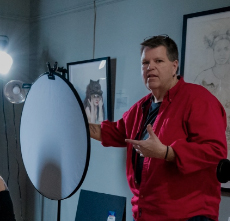
I’m Hitch. I’ve been working with cameras, light, and media for over thirty years. Not as a hobby collector and not as a gear evangelist, but as someone who’s had to make photographs work in the real world, under real constraints, with real consequences.
I’m also an engineer. That matters more than it sounds. It means I don’t trust explanations that only work in perfect conditions, and I don't teach models that fall apart the moment something changes. If a concept can’t survive bad light, limited time, or imperfect gear, it’s not finished yet.
Shutter Theory grew out of watching smart, capable people get stuck. Not because they lacked talent, but because photography is usually taught as memorization instead of understanding. Settings without context. Rules without reasoning. Advice that only works when nothing goes wrong.
I teach photography as a system of decisions. How light behaves. Why exposure changes. What to adjust, and when. Once you understand that, the camera stops feeling mysterious and starts feeling predictable. This isn’t influencer education. It isn’t trend chasing. And it isn’t about buying your way to better photos. It’s about making photography make sense, so you can stop guessing and start working with intention.
If that’s what you’re here for, you’re in the right place.